
recovering solar glass for domestic reuse
By Finley Collins | Circularity Research Analyst, SPR
In Part One of our “All About Glass” series, we discussed the complexity behind domestic solar glass reuse and why antimony content limits its reuse in U.S. float glass manufacturing. In this section, we will explore some of the viable downstream pathways for solar glass, the material that makes up the bulk of every panel.
Established glass reuse routes
Concrete Aggregate
One of the most effective ways to reduce the embodied carbon of concrete is to substitute a portion of Portland cement, the primary binder, with a supplementary cementitious material (SCM). Glass cullet is a strong SCM candidate and has been widely researched, as the practice of integrating waste glass into construction methods goes back to the mid-twentieth century. Its amorphous structure and pozzolanic reactivity, meaning that it forms a cement-like mixture when mixed with water and reacted with lime, make it a great fit for this application. Whereas color consistency can be an issue when using other glass streams, such as glass bottles, this is eliminated when using solar glass, which is primarily ultra-clear rolled glass.
Glass-ceramics
Vitrification, or glassification, refers to the process of turning waste glass into a stable and homogeneous product and is an established alternative for manufacturing glass-ceramics. Using pre-ground glass cullet can reduce the energy needs for the melting stage of glass-ceramic production, further extending the environmental benefits of reusing glass. The resulting products can be used for construction, architectural, or decorative applications.
Alternative blasting media
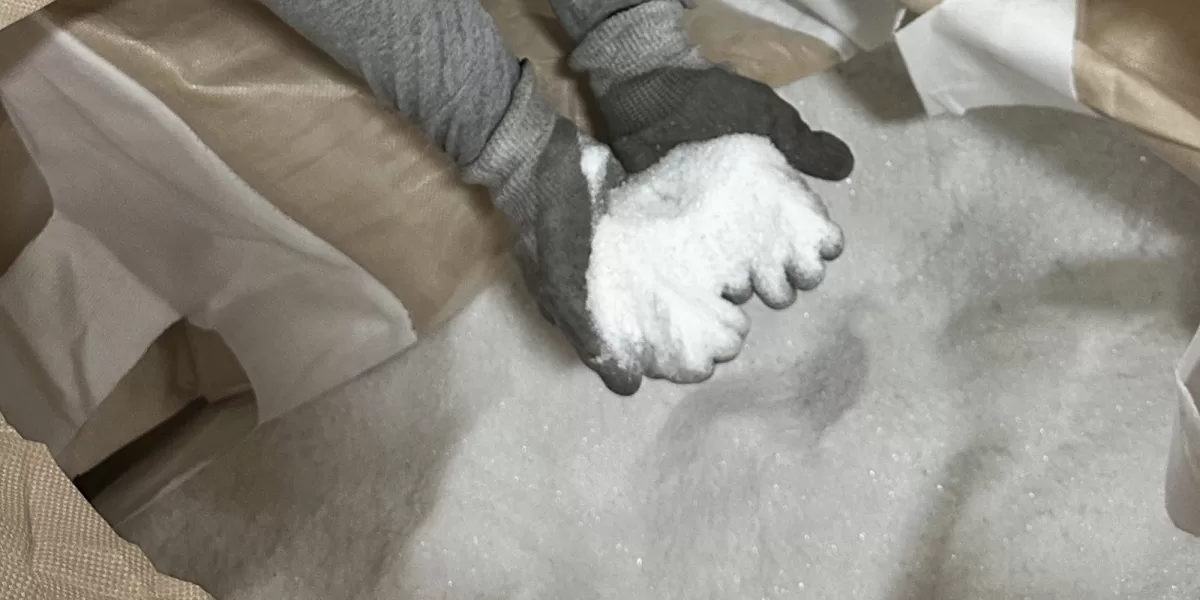
Sandblasting is used for many applications across different sectors, including industrial, construction, and automotive, to name a few. This industry has been moving away from silica sand (crystalline silica, usually in the form of quartz), which can cause silicosis and respiratory complications, and towards alternative media – namely recycled glass. Reusing glass for blasting offers benefits including increased worker safety and reduced environmental impact.
Check out one of SPR’s strategic glass reuse partners, Zafa Glass.
WHy it isn’t one-size-fits-all
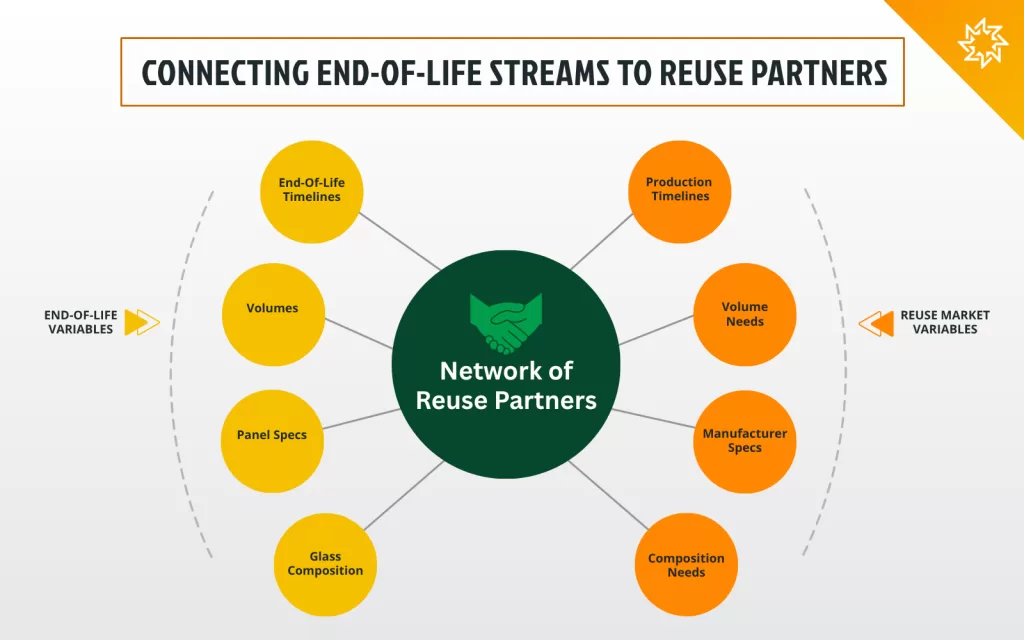
Solar panels arrive at EOL in waves from installation cycles and large-scale repower projects, or sporadically from weather events and breakage. Volumes, panel age, and panel type vary from project-to-project and year-to-year. This variation carries over to recovered glass: volumes and composition can shift. There is no single outlet or downstream pathway that can absorb that much variability.
So how do you effectively reuse a product with volume fluctuations and a composition that heavily depends on incoming inventory? You develop a network with a myriad of reuse partners.
Stay tuned for Part Three, where we’ll dive into how effective reuse is further shaped by how you move recovered materials.
Sources:
- Ground waste glass as a supplementary cementitious material for concrete: sustainable utilization, material performance and environmental considerations, Journal of Sustainable Cement-Based Materials
- Energy efficient production of glass-ceramics using photovoltaic glass and lignite fly ash, Waste Management
- SolarRecycle.org, SEIA