
Part 1: Antimony and Glass Manufacturing in the U.S.
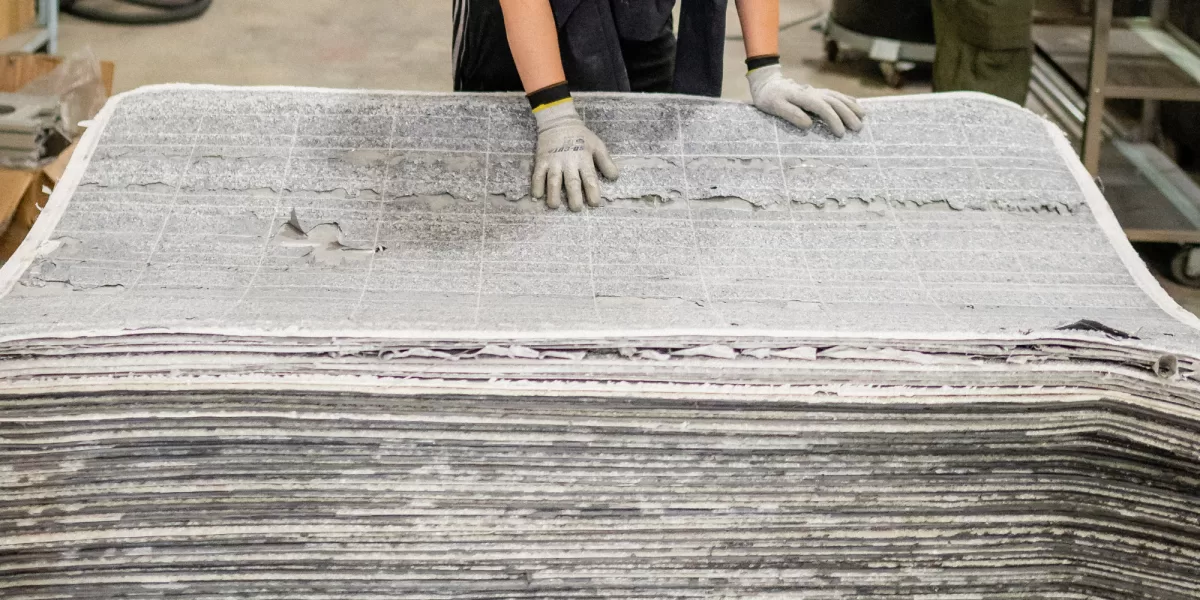
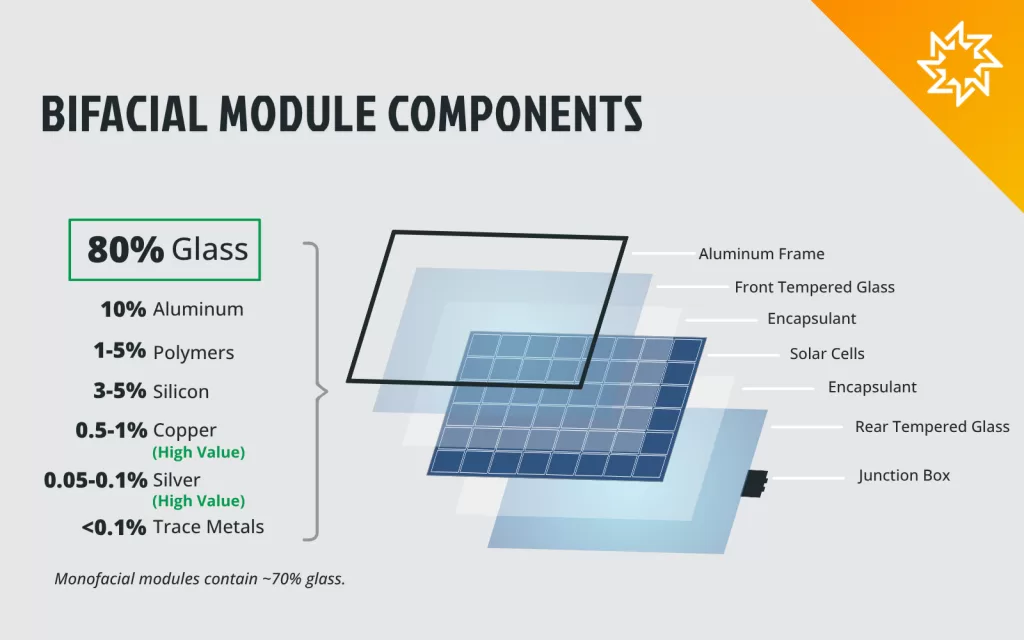
Understanding solar panel recycling starts with understanding their composition. Along with aluminum, copper, silver, silicon, and plastics, most of today’s conventional crystalline silicon modules are made of approximately 70–80% glass. But solar glass is very different from the glass used in most everyday consumer products.
All About Antimony
Most solar module glass is manufactured in China and commonly contains antimony, a metallic additive used during glass production to regulate iron content, increase absorption, and enhance overall performance. Antimony plays an important role in creating high-quality solar glass, but it also creates challenges once panels reach end-of-life.
How Glass is Made
The issue comes down to how glass is manufactured in the U.S.
Most U.S. glass manufacturers use a float glass process, where molten glass is floated across a bed of molten tin to create a smooth, uniform surface. This process is widely used because it is efficient, scalable, and produces consistent glass quality for many industries. However, float glass manufacturing is sensitive to contamination and generally cannot accommodate the levels of antimony commonly found in solar module glass.
Some specialty manufacturers use a rolled glass process, which can tolerate higher levels of antimony. But rolled glass production is less common in the U.S., typically more energy-intensive, and often more expensive to operate at scale.
The Complexity Behind Solar Glass Circularity
This is one reason why claims that old solar panels can be turned into new solar panels are often oversimplified. While the idea sounds straightforward, the reality is much more technically complex. Recovering solar glass for direct reuse in new solar manufacturing within the U.S. would currently require significant additional processing, energy, and cost, increasing the cost per watt and limiting large-scale feasibility today.
That doesn’t mean it’s impossible. It means responsible recycling requires a realistic understanding of material composition, manufacturing limitations, and the infrastructure needed to recover materials effectively.
Stay tuned for Part Two, where we’ll cover how solar glass can be recovered for beneficial domestic use.
Sources:
- Finding New Life for PV Glass and Silicon, North American Clean Energy
- Flat Glass Manufacturing, Eurotherm
- Necessity for recycling photovoltaic glass: Managing resource constraints and environmental impacts of antimony in terawatt scale photovoltaics, Science Direct